






Money Market or Savings Account: Which Is Right for You?

Choosing where to keep your savings can be just as important as deciding how much to save. While both money market accounts and traditional savings accounts can help you set money aside and earn interest, they can differ in accessibility, features, rates, and account requirements.
Understanding those differences can help you choose an account that better fits your financial goals.
What Is a Savings Account?
A savings account is designed to help you set money aside while potentially earning interest on your balance. It'scommonly used for short- and long-term savings goals, including emergency funds, vacations, major purchases, and other planned expenses.
Savings accounts generally provide easy access to your money while encouraging you to keep funds separate from your everyday spending account.
For example: If you're building a $5,000 emergency fund, keeping that money in a dedicated savings account can help you separate it from the money you use for monthly bills and everyday purchases.
Benefits of a Savings Account
A savings account may be a good choice if you:
- Want a simple place to build savings.
- Are working toward a specific financial goal.
- Want to keep savings separate from everyday spending.
- Need relatively easy access to your money.
- Prefer an account with straightforward features.
What Is a Money Market Account?
A money market account is another type of deposit account designed for saving while providing convenient access to your funds. Depending on the financial institution and account, it may offer a competitive interest rate and features that provide more flexibility than a traditional savings account.
Money market accounts may also have minimum balance requirements or other conditions, so it's important to review the account's specific terms.
For example: If you've built a larger savings balance for a future home purchase, a money market account could potentially provide a place to keep those funds while maintaining access to them when you're ready to use them.
Benefits of a Money Market Account
A money market account may be a good choice if you:
- Want to earn dividends or interest while keeping your money accessible.
- Are saving for a larger financial goal.
- Want to keep savings separate from everyday spending.
- Prefer an account that may offer more access options than a traditional savings account.
- Have a larger balance and want an account designed for higher savings balances.
Money Market vs. Savings: What's the Difference?
Both accounts can help you save and earn interest, but they may be structured differently.
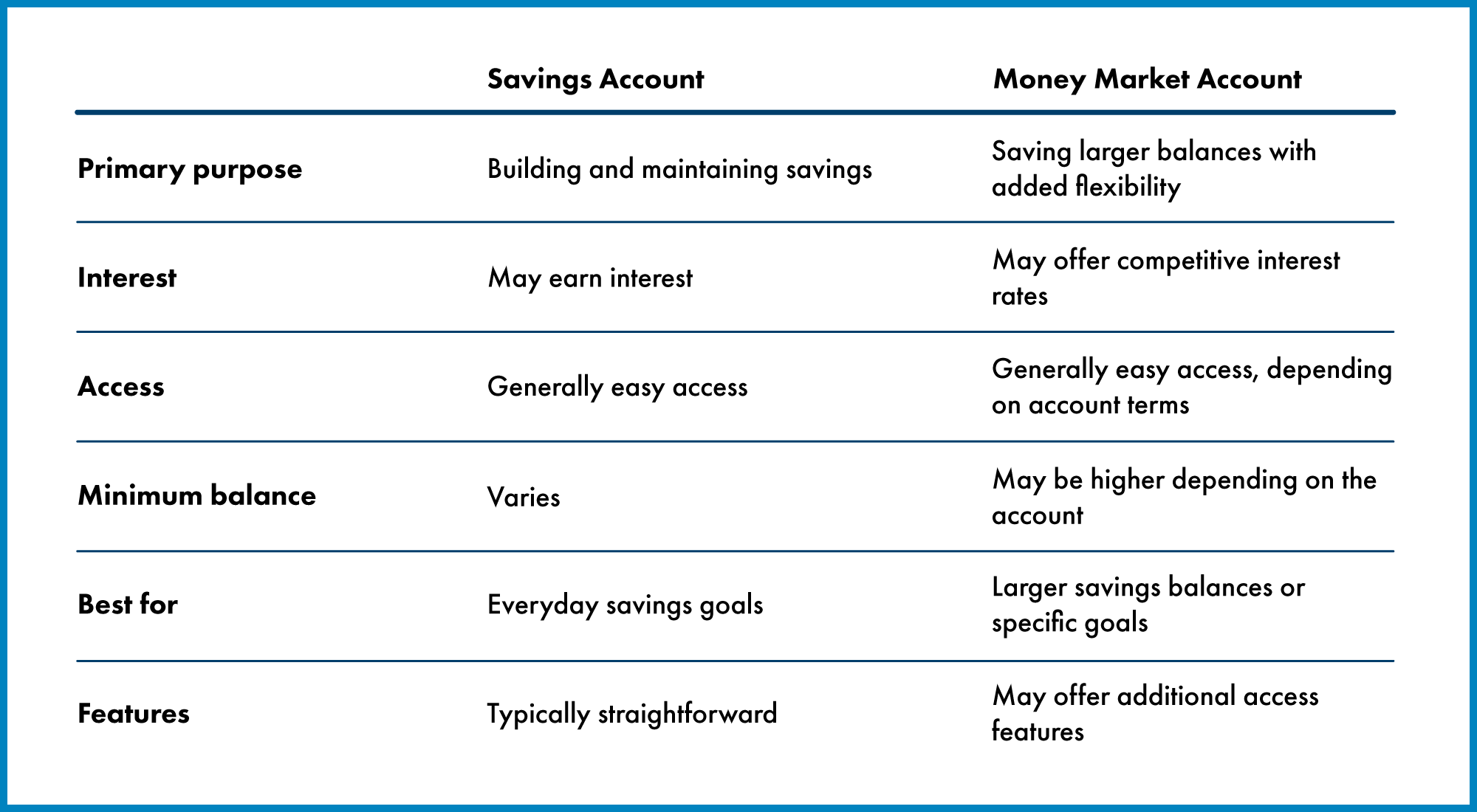
Because rates, fees, withdrawal policies, and minimum balance requirements vary by financial institution, compare the specific account terms before making a decision.
Which Account Should You Choose?
There's no universal answer. The right choice depends on how much you're saving, how often you'll need access to the money, and what you're trying to accomplish.
A Savings Account May Make Sense If...
You're building your savings gradually and want a straightforward account for your goals.
For example, if you're putting $100 from each paycheck toward an emergency fund, a traditional savings account can provide a simple way to consistently build your balance.
A Money Market Account May Make Sense If...
You have a larger balance and want an account that may provide a competitive rate while maintaining convenient access to your money.
For example, suppose you've saved $15,000 toward a future home renovation. You don't need the money immediately, but you want to keep it accessible in case your plans change. A money market account could be an option worth considering.
Consider the Interest Rate
The interest rate is an important factor when comparing accounts, but it shouldn't be the only one.
A higher rate can help your savings grow faster, particularly as your balance increases.
For example, if you maintain a larger balance for several years, even a modest difference in the rate you earn can have a meaningful impact on your total earnings.
Look at the annual percentage yield (APY) when comparing accounts. APY accounts for the effect of compounding and can make it easier to compare potential earnings between accounts.
Pay Attention to Minimum Balances
Some money market accounts may require you to maintain a minimum balance to earn a particular rate or avoid a monthly fee.
Before opening an account, make sure the requirements fit your financial situation.
You don't want to choose an account based on an attractive rate only to discover that you can't consistently meet the balance requirements.
Think About How Often You'll Need Your Money
Consider when and how you'll use the money.
If you're saving for an expense you expect to make within the next few months, accessibility may be especially important.
If you're saving for a longer-term goal, you may be more comfortable choosing an account with different requirements in exchange for potentially higher earnings.
The best account is one that balances earning potential, accessibility, and your financial goals.
You Don't Have to Choose Just One
Your financial strategy doesn't have to revolve around a single savings account.
You could use different accounts for different purposes.
For example:
- Checking: Everyday spending and monthly bills
- Savings: Emergency fund or smaller financial goals
- Money Market: Larger balances or planned major expenses
- CD: Money you don't expect to need for a set period
Separating your money by purpose can make it easier to track progress and avoid spending money you've set aside for another goal.
Don't Forget About Your Emergency Fund
Regardless of which account you choose, having accessible emergency savings is an important part of financial preparedness.
An emergency fund can help cover unexpected expenses such as:
- Vehicle repairs
- Home repairs
- Medical expenses
- Temporary loss of income
- Unexpected travel
The account you use for your emergency fund should provide a balance between earning potential and accessibility.
Questions to Ask Before Opening an Account
Before choosing a money market or savings account, consider asking:
- What APY does the account currently offer?
- Is there a minimum opening deposit?
- Is there a minimum balance requirement?
- Are there monthly fees?
- How easily can I access my money?
- Are there transaction or withdrawal limitations?
- What happens if I don't meet the account requirements?
- Is the account insured by the NCUA?
Understanding the details upfront can help you choose an account that fits your needs and avoid unexpected fees or restrictions.
The Bottom Line
Both money market and savings accounts can be valuable tools for building your financial foundation. A traditional savings account may be ideal for straightforward savings goals, while a money market account may be worth considering if you maintain a larger balance and want additional flexibility.
The right choice ultimately depends on your savings goals, balance, access needs, and the specific terms offered by your financial institution.
If you're not sure which option is right for you, compare the rates, requirements, fees, and features—and consider speaking with a financial professional who can help you evaluate your options.
« Return to "Blog"
 Share on Facebook: Money Market or Savings Account: Which Is Right for You?
  Share on Twitter: Money Market or Savings Account: Which Is Right for You?