






Your Guide to Monthly Budgeting

Creating a monthly budget is one of the most effective ways to take control of your finances. It helps you understand where your money goes, prepare for upcoming expenses, and make progress toward your financial goals.
But a budget only works if it's realistic. If your spending plan is too restrictive or doesn't account for everyday expenses, it can quickly become difficult to maintain.
The key is building a budget that fits your lifestyle, reflects your priorities, and gives you room to adjust along the way.
Here are some practical steps to help you create a monthly budget that works.
1. Calculate Your Monthly Income
Before deciding how much you can spend, start by figuring out how much money you actually bring home.
Look at your monthly take-home income after taxes, insurance, retirement contributions, and other paycheck deductions. If you receive income from multiple sources, include those as well.
If your income varies from month to month, consider using a conservative estimate based on your typical earnings. This can help prevent you from relying on income that isn't guaranteed.
Knowing your available income gives you a starting point for building a realistic spending plan.
2. Track Your Monthly Expenses
Next, take a closer look at where your money goes. Review your bank and credit card statements from the past few months to identify your regular spending habits.
Separate your expenses into two main categories:
Fixed expenses are payments that generally stay the same each month, such as:
- Rent or mortgage payments
- Car payments
- Insurance premiums
- Loan payments
- Subscription services
Variable expenses change depending on your spending habits and needs, including:
- Groceries
- Gas and transportation
- Dining out
- Entertainment
- Shopping
- Utilities
Don't forget occasional expenses like car maintenance, annual memberships, holiday shopping, and home repairs. These costs may not occur every month, but planning for them can help prevent surprises.
3. Separate Needs From Wants
Once you understand your expenses, identify which costs are essential and which are flexible.
Needs are expenses required to maintain your household and daily responsibilities, such as housing, groceries, utilities, transportation, and insurance.
Wants are expenses that make life more enjoyable but aren't necessarily essential, such as dining out, entertainment, subscriptions, and nonessential shopping.
This doesn't mean you need to eliminate every want from your budget. Instead, understanding the difference helps you decide where to adjust spending when you need more room for savings or other priorities.
4. Choose a Budgeting Method That Works for You
There isn't one budgeting method that works for everyone. The best approach is one you understand and can consistently maintain.
One popular option is the 50/30/20 budgeting rule, which divides your take-home income into three categories:
- 50% for needs: Housing, utilities, groceries, transportation, and other essential expenses.
- 30% for wants: Dining out, entertainment, shopping, hobbies, and other discretionary spending.
- 20% for savings and debt repayment: Emergency savings, retirement contributions, additional debt payments, and other financial goals.
For example, if your monthly take-home income is $4,000, the breakdown would look like this:
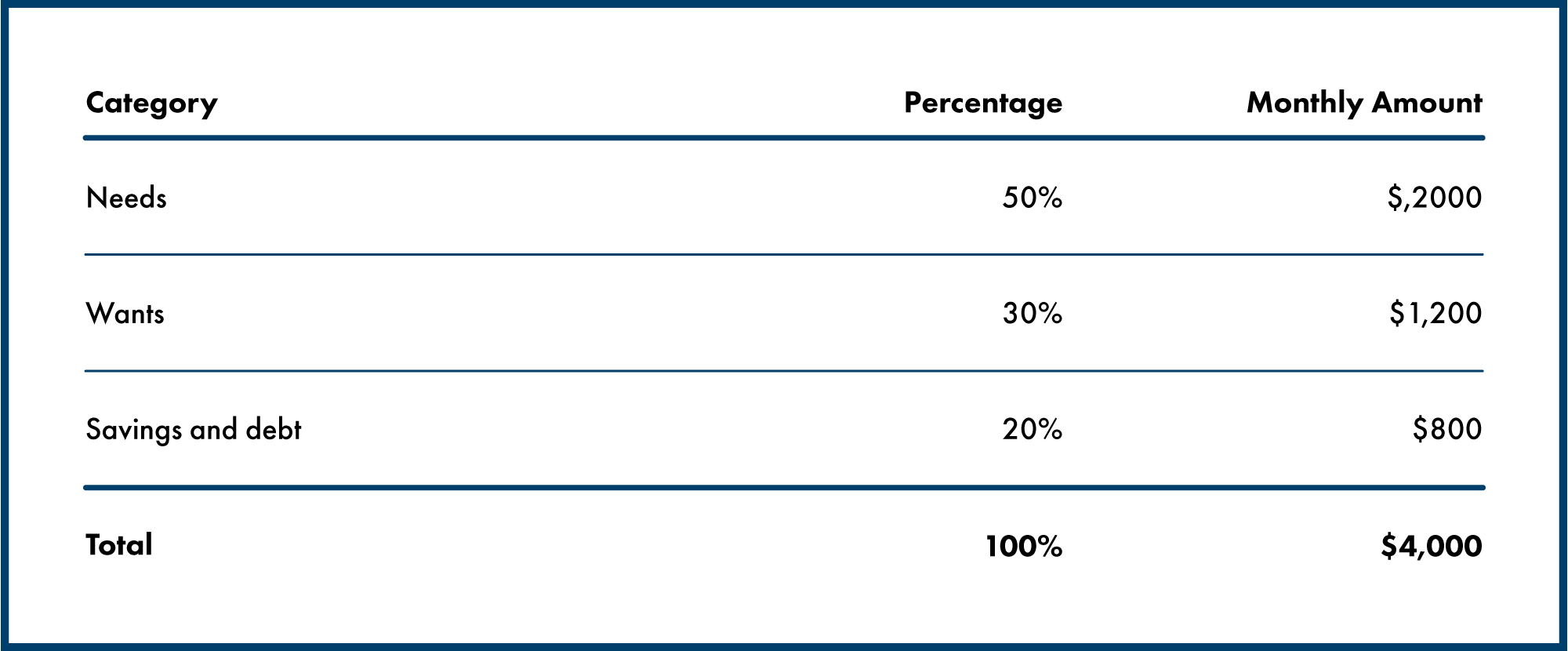
These percentages are guidelines, not strict requirements. If housing or other essential expenses take up more than 50% of your income, adjust the categories to reflect your actual financial situation.
5. Make Savings Part of Your Budget
One common budgeting mistake is treating savings as whatever money happens to be left at the end of the month.
Instead, make savings a planned expense.
Start by identifying what you're saving for. Your goals might include:
- Building an emergency fund
- Saving for a vacation
- Preparing for a down payment
- Paying for a major purchase
- Building long-term savings
Determine how much you can comfortably set aside each month and include it in your budget.
For example, setting aside $100 from each paycheck can help you build savings without requiring a significant change to your spending habits.
Consider setting up automatic transfers to move money into savings on payday. This helps make saving more consistent and reduces the temptation to spend money you've already planned to save.
6. Give Yourself Room for Unexpected Expenses
Even the most carefully planned budget can encounter unexpected expenses.
A car repair, medical bill, higher utility payment, or last-minute purchase can disrupt your monthly spending plan.
That's why it's important to leave some flexibility in your budget. Consider including a small miscellaneous category or setting aside additional money for expenses that don't happen every month.
An emergency fund can also provide a financial cushion when larger unexpected expenses arise.
The goal isn't to account for every possible situation. It's to create a budget that can adapt when things don't go according to plan.
7. Review Your Budget Throughout the Month
A budget shouldn't be something you create once and forget about.
Check your spending regularly to see how closely you're following your plan. Reviewing your accounts once or twice a week can help you identify overspending before it becomes a larger problem.
If you notice you're spending more than expected in one category, look for opportunities to adjust another.
For example, if dining out is taking up more of your monthly budget than planned, you might reduce entertainment spending or limit unnecessary shopping to balance things out.
Small adjustments throughout the month can help keep your finances on track.
8. Adjust Your Budget as Life Changes
Your budget should reflect your current financial situation, not what worked for you six months or a year ago.
Changes in income, housing costs, family responsibilities, debt, or financial goals may require you to revisit your spending plan.
Review your budget at the beginning of each month and make adjustments based on upcoming expenses and changing priorities.
If you receive a raise, consider increasing your savings contributions or paying down debt before increasing discretionary spending. If your expenses increase, identify where you can make adjustments without sacrificing essential needs.
A flexible budget is more likely to remain useful over time.
Common Budgeting Mistakes to Avoid
Even with a good plan, certain habits can make budgeting more difficult.
Watch out for these common mistakes:
- Being too restrictive: Cutting out every nonessential expense can make your budget difficult to maintain.
- Forgetting irregular expenses: Annual fees, car repairs, holidays, and other occasional costs should be included in your planning.
- Ignoring small purchases: Frequent convenience purchases, subscriptions, and small transactions can add up.
- Not tracking spending: Without reviewing your purchases, it's easy to lose sight of where your money goes.
- Giving up after one bad month: Going over budget doesn't mean you've failed. Identify what happened and make adjustments for the next month.
Build a Budget That Works for You
A successful budget isn't about restricting every purchase or eliminating the things you enjoy. It's about understanding your finances, making intentional decisions, and giving your money a purpose.
Start with your income, account for your expenses, prioritize savings, and review your progress regularly. If something isn't working, adjust it.
Remember, consistency matters more than perfection. A realistic budget you can maintain month after month is far more valuable than a perfect budget you abandon after a few weeks.
« Return to "Blog"
 Share on Facebook: Your Guide to Monthly Budgeting
 Share on Twitter: Your Guide to Monthly Budgeting